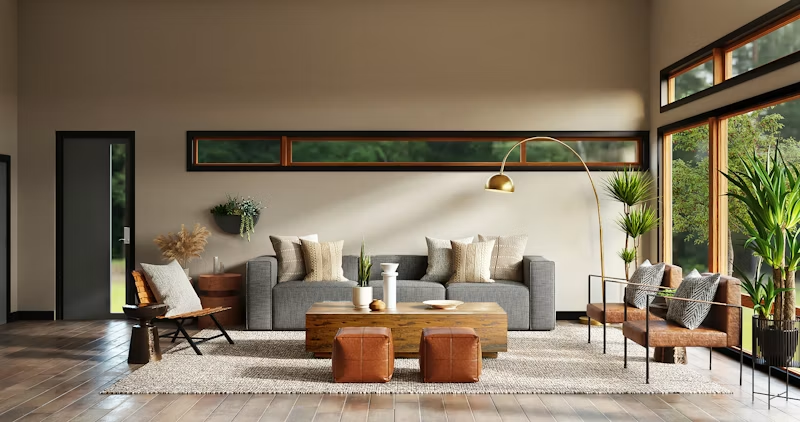
The workplace is changing—and so is the way we think about office design.
The traditional office, built around fixed desks, private cabins, meeting rooms, and a nine-to-five routine, is giving way to a more flexible model. As hybrid work becomes an established part of modern business, organisations are rethinking how their offices should look, feel, and function.
Today, employees may work from home on some days, collaborate with colleagues in the office on others, and occasionally work from cafés, coworking spaces, or while travelling. This shift has created a new question for businesses: What should the office be designed for when employees no longer need to be there every day?
The answer lies in creating workplaces that prioritise collaboration, flexibility, wellbeing, technology, and employee experience.
What Is Hybrid Workspace Design?
Hybrid workspace design refers to creating office environments that support employees who divide their working time between physical and remote locations.
Rather than giving every employee a permanent desk, hybrid offices may combine different types of spaces based on how people actually work.
These can include:
- Collaborative workspaces
- Flexible or hot-desking areas
- Private focus rooms
- Informal meeting zones
- Video conferencing rooms
- Social and breakout spaces
- Quiet areas
- Wellness zones
- Multipurpose spaces
The objective isn’t simply to reduce office space. It is to create an environment where employees have the right space for the right task at the right time.
Why Traditional Office Design Is Changing
For decades, office layouts were designed around predictability. Employees arrived at the same time, sat at assigned desks, attended meetings in conference rooms, and left at the end of the day.
Hybrid work has disrupted that model.
When employees come into the office primarily for collaboration, brainstorming, team meetings, relationship building, and social interaction, a desk-centric office may no longer provide the best experience.
This means businesses are increasingly asking:
How can the office provide something employees cannot easily replicate at home?
The answer often involves better collaboration, human connection, access to specialised facilities, creativity, and a stronger sense of belonging.
Designing for Different Modes of Work
One of the most important principles of modern office design is recognising that employees perform different types of work throughout the day.
Someone might spend the morning in a video meeting, work independently for two hours, brainstorm with a team after lunch, and finish the day handling focused tasks.
A single desk cannot effectively support every activity.
A hybrid workplace can therefore be divided into different zones.
1. Collaboration Spaces
Open collaboration areas can support brainstorming, workshops, team discussions, and creative sessions.
Flexible furniture, movable partitions, writable surfaces, and modular layouts allow these spaces to be adapted to different requirements.
2. Focus Areas
Open offices can sometimes make concentration difficult.
Quiet rooms, individual work pods, acoustic booths, and designated focus zones can give employees places where they can work without constant interruptions.
3. Social Spaces
The office also has an important social role.
Lounges, cafés, breakout areas, and informal gathering spaces can encourage spontaneous interactions and strengthen relationships between colleagues.
These spaces can be particularly valuable for hybrid teams that may otherwise have fewer opportunities for informal conversations.
4. Multipurpose Areas
Instead of assigning every square metre a single purpose, businesses can create adaptable spaces that can transition between meetings, workshops, presentations, training sessions, and social events.
This makes the workplace more responsive to changing needs.
The Rise of Flexible Workspaces
Flexibility is becoming a defining feature of the hybrid workplace.
Instead of rows of permanent desks, organisations can introduce activity-based working, where employees select a workspace based on the task they need to complete.
For example:
- Need to concentrate? Use a quiet zone.
- Working with a team? Choose a collaboration area.
- Joining a virtual meeting? Reserve a video-enabled room.
- Having an informal discussion? Use a lounge or breakout area.
This approach can make office space more efficient while giving employees greater choice.
However, flexibility should be designed carefully. Employees need clear systems for finding and booking spaces, as well as confidence that suitable workstations will be available when they arrive.
Technology Is the Backbone of Hybrid Offices
A beautiful office cannot support hybrid work without the right technology.
Technology needs to connect employees regardless of where they are working.
Important technologies for a hybrid workplace can include:
- High-quality video conferencing
- Wireless presentation systems
- Smart room-booking platforms
- Occupancy sensors
- Digital workplace apps
- Reliable high-speed connectivity
- Interactive displays
- Cloud-based collaboration tools
Meeting rooms deserve particular attention.
A hybrid meeting should not make remote participants feel like they’re simply watching a conversation happening in another room. Cameras, microphones, screens, acoustics, and room layouts should be designed to make remote and in-person participants feel equally involved.
Acoustic Design Matters More Than Ever
As offices become more open and collaborative, acoustic comfort becomes critical.
Poor acoustics can create distractions, reduce concentration, and make video calls difficult.
Workspace designers can address this through:
- Acoustic wall panels
- Sound-absorbing ceilings
- Carpeting and soft furnishings
- Phone booths
- Enclosed meeting rooms
- Strategic space planning
- Sound-masking solutions
The goal isn’t necessarily to create a silent office. Instead, it is to ensure that different activities can happen simultaneously without disrupting one another.
Employee Wellbeing Should Be at the Centre
The future workplace is increasingly focused on employee wellbeing and workplace experience.
Employees spend a significant part of their lives at work, making factors such as natural light, air quality, ergonomics, movement, privacy, and comfort important components of office design.
A wellbeing-focused workplace may include:
- Ergonomic furniture
- Access to natural light
- Indoor plants and biophilic elements
- Comfortable temperature and ventilation
- Wellness rooms
- Relaxation areas
- Standing or adjustable workstations
- Spaces that encourage movement
Biophilic design—the incorporation of natural elements into built environments—can also help create a more welcoming and calming workplace.
Designing for Employee Choice
One of the biggest advantages of hybrid workspace design is choice.
Different employees have different working styles. Some prefer quiet spaces, while others perform better around colleagues. Some need large collaborative tables, while others require private rooms for focused work.
A successful workplace does not force everyone into the same environment.
Instead, it provides a range of spaces and allows employees to choose what works best for their task.
This shift from “assigned space” to “purpose-driven space” is likely to become one of the defining characteristics of the future workplace.
Data-Driven Workspace Design
Modern offices can use data to understand how their spaces are actually being used.
Occupancy sensors, room-booking data, employee surveys, and workplace analytics can provide insights into:
- Which areas are most popular
- When the office is busiest
- Which meeting rooms are underused
- How often employees collaborate
- Where additional focus areas may be required
- How space requirements change throughout the week
This data can help organisations continuously improve their workplaces rather than relying solely on assumptions.
Importantly, workplace analytics should be implemented with appropriate privacy safeguards and transparency.
Sustainability and the Hybrid Workplace
Hybrid work also creates an opportunity to rethink sustainable office design.
If office space is used differently throughout the week, businesses can explore more efficient approaches to lighting, heating, cooling, and resource consumption.
Sustainable workplace strategies can include:
- Energy-efficient lighting
- Smart building controls
- Efficient HVAC systems
- Sustainable furniture
- Recycled and low-impact materials
- Natural lighting
- Water-efficient systems
- Reusable workplace products
Adaptive spaces can also extend the useful life of an office by allowing layouts to change as organisational needs evolve.
The Office as a Destination
Perhaps the biggest conceptual shift is that the office is becoming less of a place employees have to be and more of a place they want to be.
When employees can perform individual tasks from home, the office needs to offer additional value.
That value may come from:
Collaboration + Connection + Creativity + Culture + Community
This means future offices may prioritise spaces for team interaction, learning, social experiences, innovation, and relationship building rather than simply providing rows of desks.
Rethinking Office Space in India
The evolution of hybrid office design in India comes with its own considerations.
Indian workplaces often need to accommodate diverse employee preferences, different organisational cultures, varying commute patterns, and rapid business growth.
Climate also plays an important role in workspace planning. Natural ventilation, shading, efficient cooling, indoor air quality, and material selection can all influence workplace comfort and energy consumption.
For businesses operating in India’s rapidly growing cities, flexible workplace strategies can also help organisations respond to changing workforce requirements without constantly undertaking major office renovations.
Common Mistakes in Hybrid Workspace Design
While redesigning an office for hybrid work, organisations should avoid several common mistakes.
Designing Only for Appearance
A visually impressive office may not necessarily be functional. Workplace design should begin with employee behaviour and business requirements.
Creating Too Much Open Space
Open-plan environments can support collaboration but may negatively affect focus and privacy if there are not enough quiet areas.
Ignoring Remote Participants
Meeting rooms should be designed around hybrid participation rather than treating video conferencing as an add-on.
Removing Desks Without a Strategy
Reducing assigned seating without providing sufficient alternatives can create frustration.
Overlooking Acoustics
Noise can quickly become one of the biggest complaints in a flexible workplace.
Failing to Gather Employee Feedback
Employees are the people who use the workplace every day. Their feedback should inform both initial design decisions and future improvements.
What Will the Workplace of the Future Look Like?
There will probably not be one universal model for the future office.
A technology company may require large collaborative spaces and innovation labs. A professional-services organisation may prioritise client-facing rooms and private focus areas. A creative business may need studios and flexible project spaces.
The common thread will be adaptability.
Future workplaces are likely to become:
- More flexible
- More technology-enabled
- More human-centred
- More sustainable
- More data-driven
- More focused on wellbeing
- Less dependent on permanent desks
The workplace will increasingly function as an ecosystem rather than a collection of individual workstations.
Conclusion
Rethinking workspace design for a hybrid future is not simply about replacing desks with sofas or adding a few video screens.
It requires a fundamental shift in how organisations understand the purpose of the office.
The successful workplace of the future will bring together flexible workspace design, smart technology, employee wellbeing, collaboration, sustainability, and thoughtful space planning.
Most importantly, it will recognise that people do not work in just one way.
By designing workplaces around different activities, employee needs, and evolving business requirements, organisations can create offices that are not only more efficient but also more engaging, inclusive, and resilient.
The future of work may be hybrid—but the future of the workplace should be human-centred, flexible, and purposeful.
Frequently Asked Questions
1. What is hybrid workspace design?
Hybrid workspace design creates flexible office environments that support employees working across both physical and remote locations.
2. How should offices change for hybrid work?
Offices should provide a mix of collaboration areas, focus rooms, meeting spaces, social zones, and technology-enabled environments rather than relying exclusively on permanent desks.
3. Why is technology important in hybrid office design?
Technology connects employees working from different locations and enables effective video meetings, room booking, collaboration, communication, and workplace management.
4. What is activity-based working?
Activity-based working allows employees to select different types of workspaces depending on the task they are performing instead of assigning everyone a permanent workstation.
5. How can businesses make hybrid workplaces sustainable?
Businesses can use energy-efficient systems, smart building controls, sustainable materials, efficient space planning, and data-driven management to reduce resource consumption.
6. What is the biggest principle behind future workspace design?
The key principle is flexibility: creating a workplace that adapts to different people, tasks, work patterns, and organisational needs.